

I have spent most of my career watching advertising budgets flow in one direction: out of local economies and into the pockets of two American platforms. In Tunisia, roughly 75% of online ad spend goes to Facebook and 25% to Google. Every click costs more every year. Every dinar spent on a boosted post leaves the country. I found that genuinely unfair, and that sense of injustice is exactly what led me to build Boostiny.
This is not a story about disruption for its own sake. It is a story about observing a structural imbalance in a market I know well, designing a precise solution, and then proving it works before asking anyone for money.
From Tunis to London, Milan, and Dubai: Building the Foundation
I studied in Tunisia, all the way through my master's degree at the Institut Supérieur de Gestion. I say that because people often assume that if you have worked abroad, you must have studied abroad. That is not my case. I am Tunisian by birth and by education.
In 2005, I joined Yahoo. That single move opened a decade of intense learning. I worked in London, then Milan, then followed Yahoo into the Middle East when the company acquired Maktoob and rebranded as Yahoo Middle East. That acquisition put me at the center of what was then one of the most dynamic e-commerce and digital advertising markets in the world.
After Yahoo, I joined the Jabbar Group, which owned Maktoob before selling it, and also operated Souq.com and Cashu. These may not be household names in Tunisia, but in the Gulf they are foundational e-commerce and fintech brands. That is where I built the core of what I know about digital advertising, performance marketing, and scaling digital products at speed.
I came back to Tunisia in 2014. I wanted to contribute to what was happening after the revolution. The energy was real. People were building things. I wanted to be part of that.
The Problem I Could Not Stop Thinking About
After returning to Tunisia, I spent several years as a digital director across various agencies. And the same pattern repeated itself in every client conversation: the entire online advertising budget went to Facebook, and a smaller portion went to Google. There was almost nothing left for local alternatives.
Major players like Facebook and Google dominate a large portion of digital advertising spending across the MENA region, and in Tunisia the concentration is even sharper. The MENA digital advertising market has been growing rapidly year over year, yet the overwhelming share of that spend exits local markets entirely.
I kept asking myself: why are the people who make these platforms powerful, the billions of users worldwide who create content, share posts, and build communities, not seeing any of that value? Facebook without its users is worth nothing. But those users receive zero compensation while the platform collects billions in advertising revenue.
The second problem was specific to Tunisia: paying for Facebook ads requires foreign currency. An agency that manages your campaign charges you its commission, plus a management fee, plus the euro or dollar conversion. A click that cost 100 to 150 millimes a few years ago now costs 250 to 300 millimes, and every single one of those millimes leaves the country. I wanted to design a model where at least part of that value could stay.
Those two observations, one about fairness and one about currency flow, became the founding logic of Boostiny.
What Boostiny Actually Does: The Mechanics of Crowd Advertising
Boostiny is a self-service platform that connects brands with what I call boosters, everyday social media users who become nano-influencers for the products they choose to promote.
The concept of nano-influencer influence is not complicated. I may have 400 followers on Facebook. You may have a few hundred more. But the people in our networks, our families, colleagues, friends, people who share our interests, trust what we say far more than they trust a banner ad or a sponsored post from a brand they have never heard of. Personal recommendations from people we know remain the most trusted form of advertising, consistently outperforming branded content across every major consumer survey.
Here is how Boostiny works in practice. A brand uploads its product or offer to the platform. Our algorithm analyzes the profiles of registered boosters and identifies the ones whose audience and interests are the best match for that specific product. The booster receives a notification, reviews the offer, and if they choose to participate, they share a unique trackable link on any platform they want: WhatsApp, Viber, Facebook, SMS, it does not matter. When someone in their network clicks the link, we register that click. When that person completes a purchase or a qualifying action, the booster earns a commission. If nobody buys, nobody gets paid. That is what performance-based advertising means in practice.
On the commission generated by each transaction, we take a 30% share plus platform fees. The booster keeps the rest. The brand pays only for results.
The fraud prevention layer is critical. Any open incentive system will attract abuse. We built tracking technology that makes every link unique and auditable. Our machine learning layer continuously improves the matching between boosters and products, which increases conversion rates and filters out low-quality traffic over time.
The Algorithm at the Core: Machine Learning for Booster-Product Matching
Boostiny's predictive algorithm detects which booster is the best fit to promote a specific product. This is not a static rule. It learns.
Every time a booster shares a link, we collect data: what product was shared, on which platform, with what result. Every transaction or non-transaction feeds back into the model. Over time, the system understands that a booster who is passionate about fitness and shares links with a network of young professionals in Tunis will outperform on sports nutrition products but underperform on children's clothing. That matching intelligence is what separates Boostiny from a basic affiliate link platform.
Brands are shifting focus from mega-celebrity influencers to micro and nano creators because these creators drive authenticity, high engagement, and real community trust. What I built with Boostiny in 2018 and 2019 was ahead of that industry shift. The market has since moved toward exactly the model we were pioneering.
Nano-influencers consistently show engagement rates significantly higher than the industry average for larger accounts. When you combine that engagement advantage with a commission-only payment structure, the cost per qualified result becomes far more attractive than what brands pay for a standard Facebook campaign with no guarantee of conversion.
The platform also handles the operational complexity that would otherwise kill this model at scale: link generation, click tracking, conversion attribution, commission calculation, and payout management. The booster does not need to know any of that. They open the app, pick a product, share the link, and track their earnings.
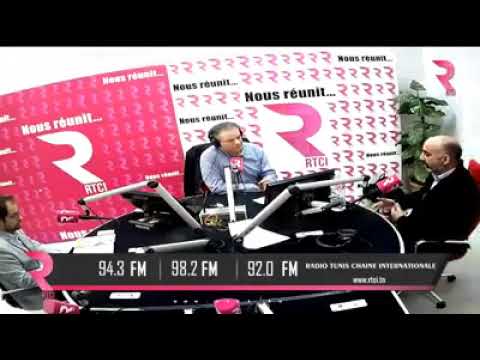
Early Traction: What Zero Marketing Spend Can Tell You
Before I went to Flat6Labs, before we raised a single dinar, we had already validated the concept. We onboarded 15 beta advertisers, more than 300 boosters, and generated over 700 leads and transactions. We did not spend anything on marketing to achieve that. Zero.
That number matters more than most people realize. Early-stage traction with zero marketing spend is one of the clearest signals that product-market fit is real. When people find your product without being pushed to find it, and when they both sign up and use it, that is not a lucky coincidence. That is a signal.
What I observed was strong interest from both sides of the marketplace simultaneously. Advertisers were attracted by the performance-only pricing model. Boosters were attracted by the ability to earn income from their existing social network without any upfront investment. Building a two-sided marketplace is notoriously difficult because you need to solve the chicken-and-egg problem: advertisers will not join if there are no boosters, and boosters will not join if there are no offers. We solved that problem by starting with a focused group and growing organically from there.
This also validated the core thesis about the trust deficit in advertising. Brands know that a significant share of consumers ignore or distrust traditional social media ads. They are paying for reach that people ignore. The booster model offers them a credible alternative: recommendations from people the recipient already knows and trusts.
The Flat6Labs Partnership: How an Idea Inside a Company Becomes a Startup
The path from idea to funded startup was not straightforward. I left my previous role in 2017, partly because I had something I wanted to build. I had been developing the Boostiny concept for more than a year in parallel with my day job.
When I met Iheb Bejji, the CEO of Medianet, he made me an offer: join Medianet and develop Boostiny inside the company. Medianet is part of a broader group that includes Afric Invest as an investor, with portfolio companies including Big Deal and other digital ventures. Their strategy was to incubate startups within the group structure and grow them as separate entities. That arrangement gave me the resources and infrastructure to build, while keeping the entrepreneurial upside.
I submitted applications to two or three seed programs, and Flat6Labs Tunis was the first to respond. I went through the selection process like everyone else, presented my pitch, and was selected for their third cohort. Flat6Labs Tunisia has invested in dozens of innovative startups since its founding, providing both capital and structured acceleration support.
Flat6Labs provides more than capital. They help you constitute the company, build the team, and compress the time it takes to go from validated idea to investment-ready business. At the time of this interview, I was still technically employed by Medianet. Full operational independence was one month away. That is how early we were.
Flat6Labs Tunis, established in 2017 with the support of key stakeholders including Le15, Meninx Holding, TAEF, and BIAT, identifies and invests in promising entrepreneurs and puts selected startups through a rigorous four-month program designed to equip them with the necessary tools and knowledge to transform their concepts into successful ventures.
For the fourth cohort, Flat6Labs was still accepting applications. From roughly 250 average candidates, seven startups are selected per cycle. The competitive ratio alone tells you how seriously people in Tunisia are taking the startup path.
The MENA Expansion Thesis: Why Tunisia Is the Right Starting Point
Tunisia is not our final destination. It is our proof-of-concept market. We chose it deliberately because we know it, we can measure everything, and the feedback loop is tight. You build something in Tunis, you test it with real advertisers and real boosters, you fix what breaks, and then you take a clean version of the model to the broader MENA region.
The MENA digital advertising market is large and growing fast. Social media advertising is particularly significant in this region, with a high proportion of shoppers using social platforms for purchase inspiration, well above global averages. That combination, high digital engagement plus a population that trusts peer recommendations over brand messaging, is exactly the environment where a booster network can scale rapidly.
I have lived and worked in Dubai. I know the Gulf market. I know the difference between running a digital product in Tunisia and running one across KSA, UAE, Egypt, and the Levant. The complexity increases, but so does the opportunity.
We are raising 800,000 Tunisian dinars to accelerate that expansion. Every dinar of that capital has a purpose: team, technology, and market entry. We are not raising money to figure out the model. The model is already working. We are raising money to go faster.
Tunisia's Startup Moment: Potential, Energy, and What Is Still Missing
Becoming a founder again after years in corporate roles is genuinely energizing. There is a point in a career where the routine becomes comfortable in a way that stops feeling like progress. Launching a startup breaks that completely. Every day is a problem to solve that did not exist the day before.
What I found when I returned to Tunisia and entered the startup world was an ecosystem that is genuinely alive. Startups are growing everywhere. There are people with real ideas and real skills who are building things. Tunisia has ranked among the top African countries on global entrepreneurship indices, reflecting the real strength of its startup culture and human capital.
But energy alone is not enough. My reference point is Estonia. A small country, no natural resources worth speaking of, but they built the infrastructure, the regulatory environment, and the investor culture that allowed Skype to emerge. They made a deliberate national bet on technology and it paid off at a scale far beyond what the size of the country would suggest.
Tunisia has the talent. We have the engineers, the mathematicians, the digital minds. What we still need is for investors to take real risk, not study it indefinitely, and for public institutions to pull the train rather than slow it down. When that alignment happens, I have no doubt that something extraordinary will come out of this ecosystem. The ingredients are already here.
To anyone listening who has an idea: the support structures exist now. Flat6Labs is here. Other programs are operational. The Startup Act created a legal framework. You have less reason to wait than at any previous point in Tunisian history. Start, test, learn, and iterate. As I have said before: no fail, no learn, no win.