
I have spent nearly two decades working in digital advertising, from Yahoo in the UK and France to group S.com in the UAE, to Medianet in Tunisia. I have watched brands pour budgets into banner ads, sponsored posts, and social media campaigns. And I have watched those budgets deliver diminishing returns, year after year. The core problem was not the creative. It was not the targeting. It was something more fundamental: people have stopped trusting the ads brands push at them.
That is why I co-founded Boostiny. Not to build yet another ad network, but to rethink the mechanics of how trust travels between a brand and a new customer.
The Trust Crisis That Every Advertiser Is Ignoring
Let me start with the number that changed how I think about advertising: 70% of internet users do not trust online ads anymore. Studies back this up consistently. Consumers are nearly 80% more likely to trust authentic peer feedback over advertisements. Global surveys show that personal recommendations from friends and family remain the most trusted advertising channel, with nearly 90% of respondents trusting word-of-mouth recommendations.
This is not a temporary blip. The decline of trust seen across leading social media platforms represents a serious challenge for the future of digital marketing, and new trust-building strategies are urgently needed.
For advertisers, this means that a growing share of their paid media budget is landing in front of audiences who are actively skeptical of everything they see. The CPM you are paying does not buy belief. It barely buys attention. Something had to change.
We Are All Nano-Influencers. That Is the Insight.
Here is the observation that sits at the heart of Boostiny: every time you share, comment, or like something online, you are influencing the people who follow you. You do not need 100,000 followers to move purchasing decisions. You just need a real voice and a real community, even if that community is 200 friends on WhatsApp, a Facebook group you moderate, or a Snapchat circle.
We are all nano-influencers. That is not a marketing metaphor. It is a structural reality of how social networks operate. The question I asked myself was simple: what if we could activate that organic trust at scale, and connect it directly to brand performance?
That is what Boostiny does. We call these everyday people "boosters." Every booster in our network has the potential to generate real transactions for a brand, not just impressions or clicks into a void. And they get paid for it.
How the Platform Works: Self-Service, Predictive, and Commission-Based
Boostiny is a self-service web platform for brand advertisers, paired with a mobile app for boosters. The mechanics are straightforward, and that simplicity is deliberate.
An advertiser creates a campaign on Boostiny and sets the commission amount they are willing to pay per qualified click or per confirmed transaction. From there, Boostiny's predictive algorithm takes over: it identifies which boosters in the network are the best match for that specific product, based on their audience profile, platform activity, and past conversion behavior.
A matched booster then creates a post, a Facebook update, a WhatsApp message, a Snapchat story, or shares the campaign on any social channel of their choice. Every link shared by a booster is generated and tracked by Boostiny. If someone clicks, the booster earns. If someone buys, Boostiny tracks the full transaction, calculates the commission automatically, credits the booster's account, and allows them to cash out via mobile payment or bank transfer.
On each commission generated, Boostiny takes a 30% share, plus fees when we manage the campaign directly. The model is fully performance-based: if no transaction happens, no fee is charged. That is a fundamentally different risk profile than prepaid social media advertising, where you pay regardless of outcome.
The Predictive Matching Layer: Why Algorithm Matters Here
The matching component is not cosmetic. It is the operational core of why this model works at scale and does not devolve into random noise.
Without intelligent matching, a network of 300 boosters promoting 45 different products becomes chaotic and inefficient. The wrong person promoting the wrong product to the wrong audience converts at near zero. That wastes the booster's time, degrades their credibility with their network, and delivers no ROI to the advertiser.
Boostiny's predictive algorithm solves this by pairing each campaign with the boosters most likely to drive real outcomes, not just activity. As the network scales to tens of thousands of boosters across multiple countries, this matching layer becomes the primary competitive moat. It is what separates a genuine performance marketing platform from a glorified affiliate link farm.
Early Traction: What Three Months of Beta Proved
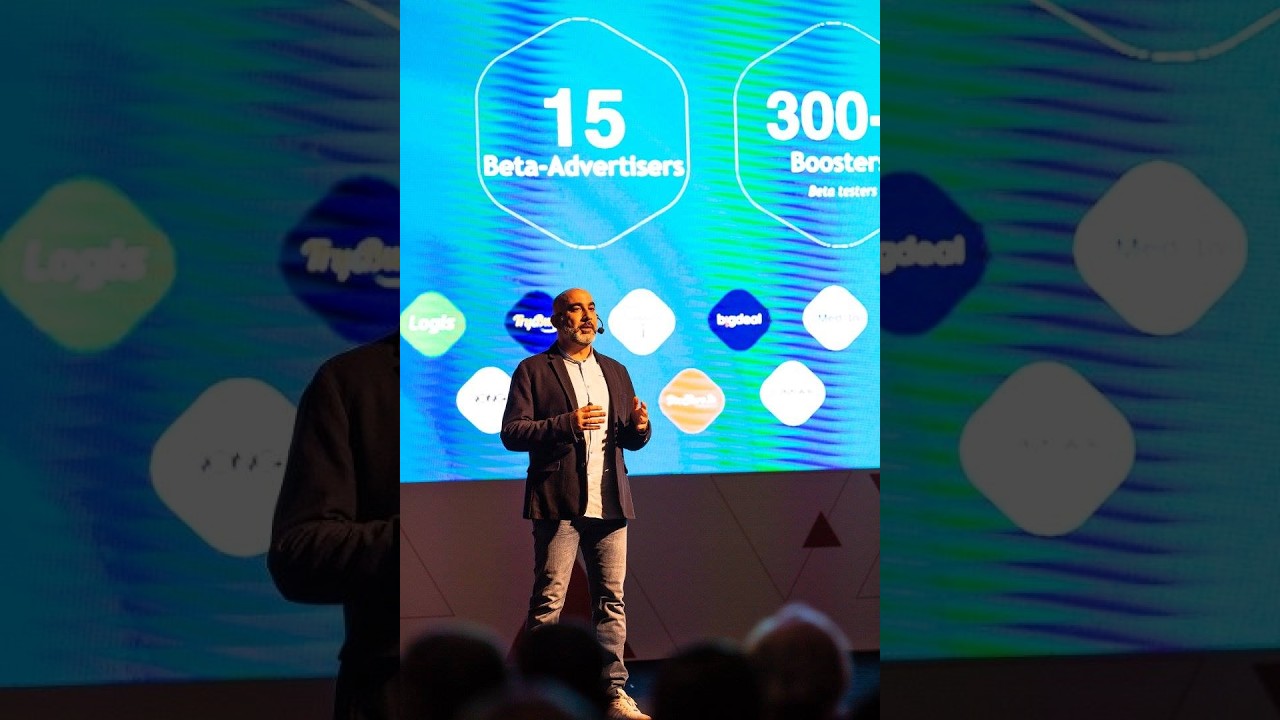
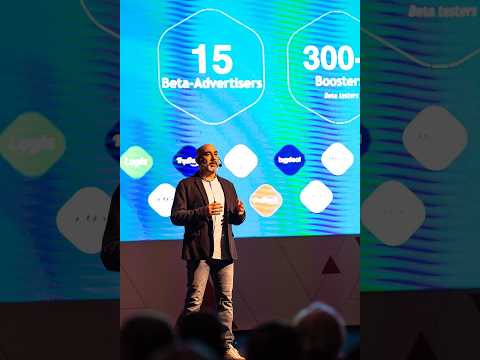
We did not wait for a perfect product to start validating demand. After just three months of beta, with zero marketing spend, Boostiny had already attracted 15 beta advertisers and more than 300 boosters, and had generated over 700 leads and transactions.
Beyond raw usage numbers, we secured strategic partnerships with Medianet, the largest digital agency in Tunisia, and with Subflu, one of the leading mobile and micropayment solutions in the country. These partnerships are not vanity logos. They are direct distribution channels: Medianet connects us to advertisers, and Subflu enables seamless booster payouts.
For a platform that had been running for three months, this traction told me two things clearly. First, the trust deficit in online advertising is felt acutely enough by advertisers that they will try an alternative quickly. Second, the commission model resonates with boosters immediately because the value proposition is simple: share what you believe in, get paid when it converts.
The MENA Market Opportunity: Why the Timing Was Right
I did not pick the MENA market arbitrarily. I picked it because I had spent years working inside it, and I understood both its momentum and its structural gaps.
The digital advertising market in MENA was valued at $6.6 billion in 2023 and is projected to reach $44.8 billion by 2032, growing at a CAGR of 23.9%. When I launched Boostiny, the regional social media advertising market was already growing at more than 20% per year. Social media is a dominant force in purchase decisions, with 78% of shoppers in the Middle East using social media for purchase inspiration, compared to the global average of 37%.
Our expansion sequence was Tunisia first, then Morocco and Egypt in year two, then the broader Middle East in year three. Our first-year target was 20,000 boosters in Tunisia, 45 active advertisers, and 400,000 dinars in revenue. By year three, the goal was 100,000 boosters across the region, more than 200 advertisers, and revenue of 5 million dinars.
The Fundraise: 800,000 Dinars and What We Planned to Do With It
To execute that roadmap, we raised 800,000 Tunisian dinars. The allocation had three clear priorities. First, booster recruitment through targeted marketing, because the platform's network effects only activate once you cross a critical density of active boosters in a geography. Second, sales and customer acquisition, specifically building a direct sales team to sign advertisers at volume. Third, growing our core team with additional talent.
The founding team at that point consisted of myself with 19 years of digital and e-commerce experience, our CTO Mohammed Anis with over five years in mobile and web development, and Aziz leading marketing and outreach. Every line item in that fundraise was connected to a specific growth bottleneck.
What Boostiny Taught Me About Building Digital Products in MENA
Looking back at the Boostiny pitch and the journey that followed, several lessons stand out that I now bring to every consulting engagement and product strategy mandate.
First, start with a real behavioral insight, not a feature. The insight that everyone is already a nano-influencer came from watching how people actually use social networks, not from a brainstorming session. Product strategy built on observed behavior is far more durable than product strategy built on assumed intent.
Second, the performance model removes friction from the advertiser relationship. When you only charge on results, you lower the barrier to adoption significantly. The first 15 advertisers did not need to be convinced that Boostiny worked. They only needed to believe it was worth trying at no risk.
Third, matching quality determines platform quality. You can have a thousand boosters and still deliver poor results if the wrong person is promoting the wrong product. The predictive layer was not a nice-to-have feature. It was the mechanism that made the model defensible.
Boostiny was later acquired by ArabyAds, where I went on to serve as CPO and helped scale the business from $70M to $100M+ ARR. That journey started with this pitch in Tunis, at a Demo Day, with a product that had been live for three months.
If you are building a digital product in MENA or navigating a similar growth inflection point and want to think through product strategy, AI integration, or go-to-market execution with someone who has done it from zero to exit, visit nachnouchi.com and request a consultation.