
I have spent nearly two decades in digital advertising across MENA and Europe. I worked at Yahoo in the UK and France, I operated in the UAE with major digital groups, and I built and scaled products that processed millions of ad impressions. So when I tell you that the current online advertising model is fundamentally broken, I am not speaking as an outside critic. I am speaking from the inside.
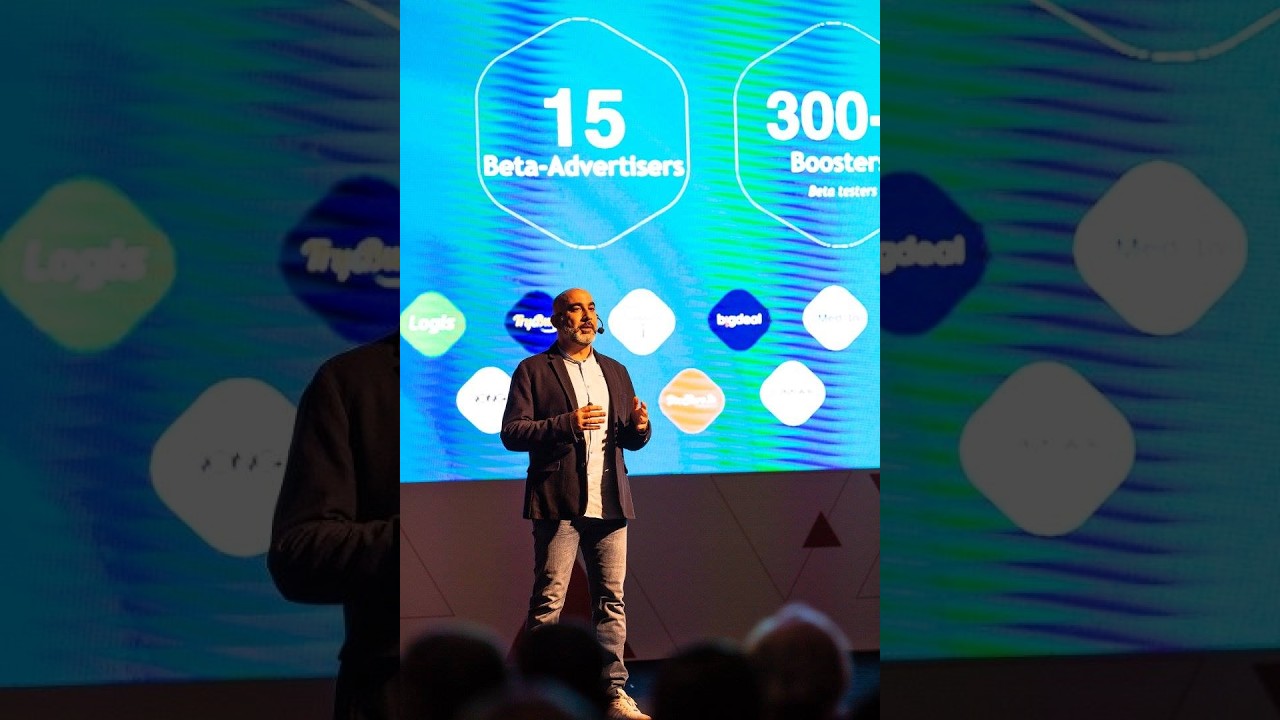
When I stood on stage at the Flat6Labs Tunis Demo Day to pitch Boostiny (we called it Bini at the time), the first number I put in front of investors was not a revenue figure. It was a trust figure. And it stopped the room.
The Core Problem: 70% of Internet Users Do Not Trust Online Ads Anymore
Studies show that 70% of internet users do not trust online ads anymore. That is not a marginal dissatisfaction. That is a structural collapse of the channel that the entire digital economy depends on. Brands are pouring billions into impressions that most people actively ignore, scroll past, or block entirely.
The data confirms this beyond anecdote. Research shows that 78% of consumers trust peer reviews more than ads. Nielsen global survey data shows that personal recommendations from friends and family remain the most trusted advertising channel, with nearly 90% of respondents placing confidence in word-of-mouth. Meanwhile, the paid display and social feed formats that dominate digital budgets rank far lower in consumer trust.
This is the paradox I kept running into throughout my career: digital advertising spend was growing, but its credibility was eroding. Brands were paying more to be trusted less. There had to be a better way.
We Are All Nano-Influencers. We Just Did Not Know It Yet.
Here is the insight that became the foundation of Boostiny. Every time you share a post, comment on a product, or recommend a restaurant to your WhatsApp group, you are influencing the people around you. You are not a celebrity. You do not have a million followers. But in your community, your word carries weight precisely because it is yours.
We are all nano-influencers. And nobody was monetizing that at scale.
The influencer marketing industry has spent years obsessing over reach, chasing mega-accounts with millions of followers and paying premium rates for audiences that are often disengaged. The data tells a different story. According to HypeAuditor's State of Influencer Marketing report, nano-influencers achieve an engagement rate of around 4%, compared to just 0.92% for mega-influencers. Research from Later found that nano-influencers drive up to 8 times more engagement than their mega counterparts. The reason is simple: smaller creators feel like peers, not advertisers. Their recommendations land differently.
The question I asked myself was this: what if you could activate thousands of these everyday people simultaneously, pay them only for results, and let an algorithm decide who should promote what? That is Boostiny.
How the Platform Works: Performance at Every Step
Boostiny is a self-service web platform with a complementary mobile app. It connects brand advertisers with a network of social media users, whom we call boosters, and it operates on a pure performance model.
Here is the mechanics in practice. Say Jumia wants to promote a new pair of shoes. They log into Boostiny, create a campaign, and set the commission they are willing to pay per transaction or per qualified click. Boostiny's predictive algorithm then identifies which boosters in the network are the best match for that specific product, based on their audience profile, past performance, and content affinity.
A booster receives the campaign opportunity. She creates a Facebook post, shares a Boostiny-generated link with her friends on Snapchat, sends it via WhatsApp, or posts it on any social network she uses. If someone clicks that link, she generates her first revenue. If someone buys the shoes through that link, Boostiny tracks the transaction, calculates her commission, credits her account, and lets her cash out through mobile payment or bank transfer.
This is not influencer marketing in the traditional sense. There are no upfront fees, no guaranteed payments for reach, no brand safety nightmares from accounts you barely vetted. Every dinar spent by the advertiser is tied to a result. On the commission earned, we take a 30% platform share, plus fees when we manage the campaign directly.
The collaborative economy logic is clean: boosters earn by sharing what they genuinely want to share, advertisers pay only for outcomes, and the platform captures value from the spread.
The Predictive Algorithm: Matching at Scale Without Manual Guesswork
The matching problem is the hardest part of any network-based advertising model. If you push the wrong product to the wrong booster, she will either ignore it or share it to an audience that has zero purchase intent. Both outcomes are waste.
Boostiny's predictive algorithm solves this. It continuously learns which boosters convert best for which product categories, price points, and geographies. Over time, the system does not just match based on demographics. It matches based on demonstrated performance. The best boosters for a given campaign surface automatically, and advertisers do not need to manually sift through profiles.
This is where AI and data-driven decision making become structural competitive advantages, not features. Research shows that 71% of marketers plan to use AI to identify the best influencer for their brand. We built that capability directly into the platform from day one, not as an add-on, but as the core routing engine. The algorithm is what separates Boostiny from a simple affiliate link generator.
Early Traction: 700+ Transactions With Zero Marketing Spend
When I pitched at Flat6Labs, we had been in beta for three months. No paid marketing. No acquisition campaigns. Just word of mouth and direct outreach from the founding team.
The numbers already showed something real: 15 beta advertisers onboarded, more than 300 boosters registered, and more than 700 leads and transactions generated. We had great interest from both sides, boosters and advertisers, without any marketing effort.
That organic bilateral traction is the signal that matters in a marketplace business. When both supply and demand grow without you pushing them, you have found product-market fit. The challenge shifts from proving the concept to scaling the network.
We also secured strategic partnerships with major players in the Tunisian digital ecosystem: Medionet, one of the biggest digital agencies in the country, and Subflu, a successful mobile and micropayment solution. These partnerships were not just credibility markers. They were distribution channels that gave us direct access to advertisers and to the payment rails that boosters need to collect their earnings.
The MENA Market Opportunity: A Region Growing at 20%+ Per Year
Tunisia was our controlled test market. The real ambition was always MENA.
The numbers justify the urgency. According to data from Astute Analytica, the MENA digital advertising market was on track to exceed $12 billion by 2024, growing at a compound annual rate of nearly 24% through 2032. Research and Markets projects the broader MENA advertising market to reach $17.36 billion by 2029, expanding at a 13.39% CAGR. Social media already accounts for more than half of total digital ad spend in the region, and social media users in the Middle East spend an average of nearly four hours per day on platforms like Instagram and TikTok, almost double the consumption levels in Europe.
This is a region with massive social media engagement, a young and digitally native population, and growing e-commerce infrastructure. It is precisely the environment where a booster network scales quickly, because the social sharing behavior that makes Boostiny work is already deeply embedded in daily life.
Our roadmap was built around this. Year one: reach 20,000 boosters in Tunisia, 45 advertisers, and generate 400,000 dinars in revenue. Year two: expand into Morocco and Egypt. Year three: cover the rest of the Middle East, reach 100,000 boosters, more than 200 advertisers, and generate 5 million dinars in revenue.
The sequence is deliberate. Prove the model in a contained market, then replicate fast. MENA has enough structural similarity across its digital advertising markets that the playbook does not need to be rebuilt from scratch in each country.
The Fundraise: 800,000 Dinars With a Clear Allocation
We went to Flat6Labs raising 800,000 Tunisian dinars. The use of funds was specific and grounded in what we had already learned from the beta.
The three priorities were clear. First, booster recruitment through paid marketing, because organic growth validates the model but does not scale the supply side fast enough. Second, sales expansion through customer recruitment, to grow the advertiser base and deepen relationships with existing partners. Third, team growth, bringing in the talent needed to build the product, manage operations, and execute the MENA expansion.
Fundraising discipline means not raising for vanity. Every dinar from this round was mapped to a specific lever that we had already proven moved the business forward during beta. This is how I approach capital allocation: test cheaply, identify what works, then fund only the things that already have evidence behind them.
The Team Behind the Product
A platform like Boostiny does not get built on ideas alone. It gets built by people who are obsessed with the problem and complementary in their skills.
I brought 19 years of experience in digital advertising and e-commerce to the table, including time at Yahoo in the UK and France, a major digital group in the UAE, and Medionet in Tunisia. That background meant I understood both the advertiser side and the technical infrastructure of ad delivery at scale.
Muhammad Anis Mahub, our CTO, was much more than an engineer. With five-plus years in mobile and web development, he was the technical architect of everything that made Boostiny run: the tracking, the algorithm, the mobile app, the cashout integrations. Aziz led marketing and outreach, converting interest into signed advertisers and active boosters. And a group of talented interns brought energy and execution capacity that early-stage startups depend on but rarely acknowledge enough.
Founder-market fit matters. A team that does not understand the problem space from the inside will build a product that sounds right on paper but misses the operational realities. We did not have that problem.
The Bigger Lesson: Performance Marketing Is the Direction the Industry Is Moving
Looking back at the Boostiny pitch, what strikes me is how much the market has since validated the thesis. The trust deficit in online advertising has only deepened. Brands are under pressure to show that every marketing dinar produces measurable outcomes. And the appetite for performance-based models, where payment is tied to results rather than impressions, is accelerating across the industry.
The GCC region is increasingly moving toward performance-based advertising. Influencer marketing globally is now a $32 billion industry and growing, with 44% of brands actively preferring nano-influencers over macro or celebrity alternatives. The collaborative economy model applied to advertising is not a niche experiment. It is the direction the industry is moving.
Boostiny was built on that conviction. And the journey from Demo Day pitch to eventual acquisition by ArabyAds, where I then scaled the platform from $70M to $100M+ ARR as CPO, confirmed what the beta numbers had already suggested: when you build for trust, performance follows.
If you are building a product or scaling a digital business in MENA or Europe and want to think through your product strategy, your AI integration roadmap, or your go-to-market execution, I work with SMEs and startups on exactly these challenges. Visit nachnouchi.com to start the conversation.